
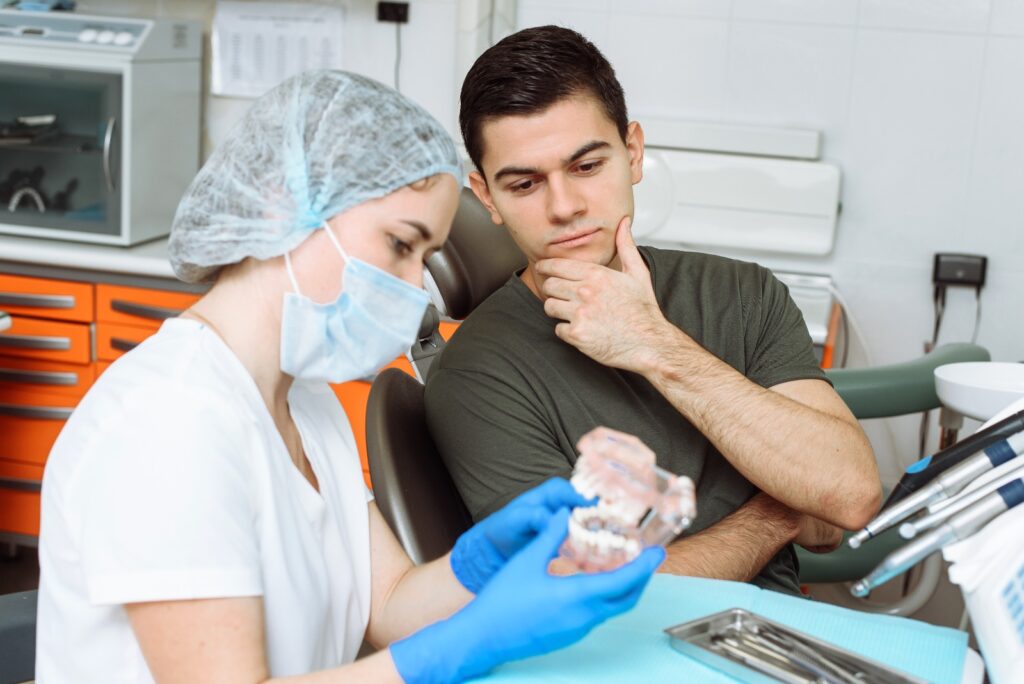
When you’re dealing with severe tooth pain or an infected tooth, one of the first questions that comes to mind is: Should I have a root canal or get the tooth extracted? While both treatments can relieve pain and treat infection, the best option often depends on the condition of your tooth and your long-term oral health goals.
At Pearl Dental Surgery, our experienced team helps patients make informed decisions by carefully assessing each case during a dental checkup in Norwich. In many situations, saving your natural tooth is the preferred option, but there are times when extraction may be necessary.
What Is a Root Canal?
A root canal treatment removes infected or damaged tissue from inside the tooth. The canals are cleaned, disinfected, and sealed to prevent further infection. A crown may then be placed to strengthen the tooth.
Root canal treatment is designed to:
- Relieve severe tooth pain
- Remove infection
- Save your natural tooth
- Restore normal chewing and function
Modern root canal treatment is far more comfortable than many people expect and can often be completed with minimal discomfort.
What Is a Tooth Extraction?
A tooth extraction involves removing the entire tooth from the mouth. This may be recommended if:
- The tooth is severely damaged
- There is extensive decay below the gum line
- The tooth cannot be restored
- Advanced gum disease has loosened the tooth
- The tooth is cracked beyond repair
Although extraction can solve the immediate problem, it often creates another issue: a missing tooth that may eventually need replacing.
Is It Better to Save Your Natural Tooth?
In most cases, dentists prefer to save a natural tooth whenever possible.
A root canal allows you to:
Maintain your natural bite
Preserve jawbone health
Prevent neighbouring teeth from shifting
Avoid the need for replacement treatments
At Pearl Dental Surgery, preserving your natural smile is always a priority whenever it is clinically possible.
When Is a Root Canal the Better Option?
A root canal may be recommended if:
- You have an infected tooth pulp
- There is deep decay
- You have severe tooth sensitivity
- The tooth can still be restored successfully
- You want to avoid losing the tooth
Many patients are surprised to learn that root canal treatment can often save teeth that appear badly damaged.
When Is Extraction the Better Choice?
Extraction may be the better option when:
- The tooth is beyond repair
- There is severe bone loss
- The tooth has fractured below the gum line
- The infection is too extensive to restore the tooth predictably
Following extraction, your dentist may recommend replacing the missing tooth with:
- Dental implants
- Dental bridges
- Dentures
Our team at Pearl Dental Surgery offers a wide range of restorative treatments to help Norwich patients regain a healthy, confident smile.
Which Treatment Costs Less?
Many people assume extraction is the cheaper option. While the initial procedure may cost less, the long-term costs of replacing a missing tooth can often exceed the cost of saving the natural tooth with a root canal.
A dental checkup in Norwich can help determine the most cost-effective and suitable treatment for your situation.
What Happens If You Delay Treatment?
Ignoring an infected tooth can lead to:
- Increased pain
- Facial swelling
- Dental abscesses
- Difficulty eating
- Damage to surrounding teeth
- More complex and expensive treatment
In rare cases, untreated dental infections can affect your overall health.
Seeking advice from an experienced dentist in Norwich as soon as symptoms develop can help prevent complications.
How Does a Dentist Decide Between Root Canal and Extraction?
Your dentist will consider several factors, including:
- The extent of the infection
- The amount of remaining tooth structure
- Gum and bone health
- Your overall oral health
- Your long-term treatment goals
At Pearl Dental Surgery, every patient receives a personalised assessment and treatment recommendation designed to achieve the best possible outcome.
Why Choose Pearl Dental Surgery?
Our team provides comprehensive dental care for Norwich patients, including:
- Dental checkups
- Root canal treatment
- Emergency dental care
- Dental implants
- Cosmetic dentistry
- Dental hygiene treatments
- Sedation for nervous patients
Whether you are experiencing tooth pain or need advice on the best treatment option, our friendly team is here to help.
Final Thoughts
So, is it better to have a root canal or extraction?
In many cases, a root canal is the preferred option because it saves your natural tooth and helps maintain your long-term oral health. However, when a tooth cannot be restored, extraction followed by an appropriate replacement may be the best solution.
If you’re experiencing tooth pain or think you may have an infection, book a dental checkup in Norwich with Pearl Dental Surgery. Early diagnosis and treatment can often save your tooth and help you avoid more complex dental problems in the future.