
For many adults, Invisalign and traditional braces can both straighten teeth effectively. Invisalign may be preferable if you value discreet, removable aligners, while traditional braces can be suitable for a wide range of orthodontic problems. The best option depends on your teeth, bite, treatment requirements and lifestyle.
If you’re considering orthodontic treatment as an adult, you may be wondering whether Invisalign or traditional braces would work better for you.
There isn’t one solution that is best for everyone.
What Is Invisalign?
Invisalign uses a sequence of clear, removable aligners to gradually move your teeth.
The aligners are designed to be discreet and can be removed when eating and cleaning your teeth.
Pearl Dental Surgery offers Invisalign in Norwich for concerns including crowded teeth, gaps and certain bite problems.
What Are Traditional Braces?
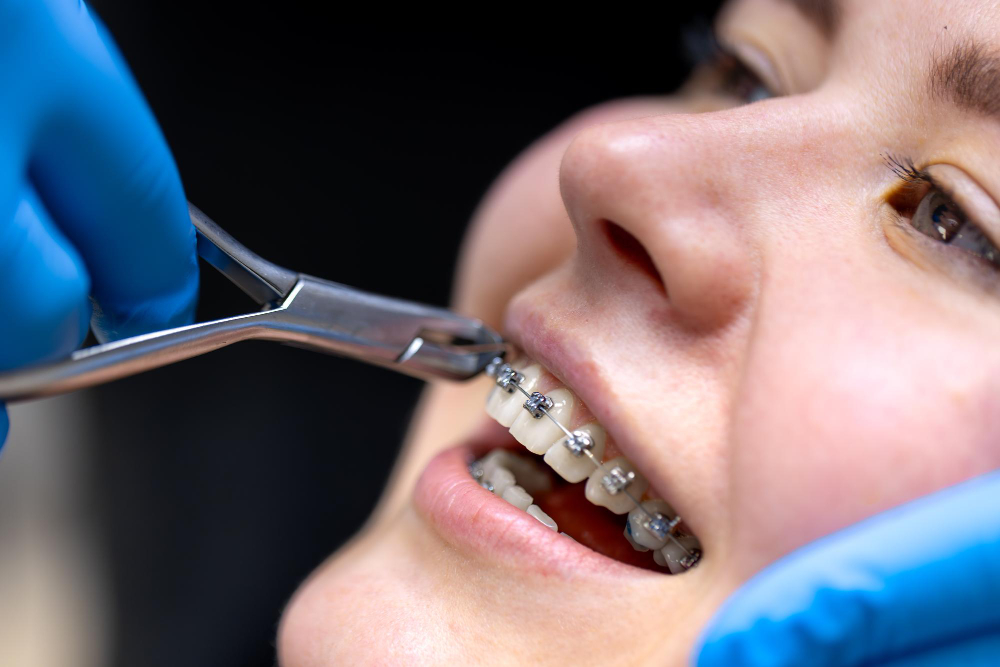
Traditional braces use brackets attached to the teeth and wires to apply controlled forces that gradually move teeth.
They remain fixed throughout treatment, meaning you don’t need to remember to put them back in after eating or cleaning.
Invisalign vs Braces: Key Differences
| Feature | Invisalign | Traditional Braces |
|---|---|---|
| Appearance | ✓ Clear and discreet | More visible |
| Removable | ✓ Yes | No |
| Eating | Aligners removed | Certain foods may need to be avoided |
| Cleaning | Aligners removed for cleaning | Requires careful cleaning around brackets |
| Appearance for adults | Very discreet | More noticeable |
| Suitability | Many mild to moderate and selected complex cases | Broad range of orthodontic cases |
| Compliance | Requires consistent wear | Fixed to teeth |
The exact suitability of either option depends on your dental assessment.
Which Looks Better?
For adults concerned about the appearance of orthodontic treatment, Invisalign has an obvious advantage.
The aligners are designed to be much less noticeable than conventional metal braces.
This can be particularly attractive if you work in a client-facing role or simply prefer a discreet treatment option.
Which Is Easier to Clean?
Invisalign aligners can be removed when brushing and flossing, allowing you to maintain your usual oral hygiene routine more easily.
However, the aligners themselves also need to be cleaned properly.
Pearl Dental Surgery recommends cleaning Invisalign aligners with warm water and a soft toothbrush and advises avoiding toothpaste because of its abrasive nature.
Traditional braces require careful cleaning around brackets and wires.
Regardless of the orthodontic option, maintaining good oral hygiene throughout treatment is important.
Can You Eat Normally With Invisalign?
One advantage of Invisalign is that the aligners can be removed before eating.
With fixed braces, certain hard or sticky foods may need to be avoided because they can damage brackets or wires.
This makes Invisalign attractive to adults who want fewer changes to their normal eating routine.
Which Is More Convenient for Adults?
For many adults, Invisalign offers lifestyle advantages.
The aligners are removable and discreet, making them convenient for work, social events and everyday activities.
However, convenience comes with responsibility.
Because Invisalign is removable, patients need to follow their dentist’s instructions and wear the aligners consistently.
Is Invisalign Suitable for Every Adult?
No.
Although Invisalign can treat many orthodontic concerns, it isn’t automatically suitable for every patient or every type of tooth movement.
A dentist or orthodontic professional needs to assess:
- Tooth position
- Crowding
- Gaps
- Bite
- Gum health
- Existing dental restorations
- Overall oral health
They can then recommend the most appropriate treatment.
Which Is Better: Invisalign or Braces?
Invisalign may be better for you if:
- You want a discreet treatment
- You prefer removable aligners
- You want to remove your appliance when eating
- You are comfortable following a daily wear routine
- Your dental problem is suitable for clear aligner treatment
Traditional braces may be better if:
- Your case requires fixed orthodontic treatment
- You prefer not to manage removable aligners
- Your dentist recommends fixed braces for your particular tooth movements
- You have a more complex orthodontic problem that may be better managed with fixed appliances
Ultimately, the best orthodontic treatment is the one that suits your dental needs, lifestyle and treatment goals.
Invisalign for Adults in Norwich
If you’re an adult considering orthodontic treatment in Norwich, Pearl Dental Surgery provides Invisalign consultations at its Earlham Road practice.
The practice states that Invisalign is suitable for many adults and teenagers and provides personalised treatment planning based on individual needs.
Frequently Asked Questions (FAQs)
Is Invisalign better than braces for adults?
It depends on your individual needs. Invisalign is particularly attractive to adults who want a discreet, removable option, while traditional braces remain suitable for many orthodontic cases.
Is Invisalign more expensive than braces?
Costs vary according to treatment complexity and the provider. Pearl Dental Surgery currently states that Invisalign prices typically start from £3,000, with the final cost determined after consultation.
Can Invisalign fix gaps in teeth?
Yes, Invisalign can address certain types of gaps. Your dentist will assess the cause and severity of the gap before recommending treatment.
Can Invisalign fix crowded teeth?
Invisalign can treat many cases of crowding, although suitability depends on the severity and type of crowding.
Do adults need braces?
Adults can benefit from orthodontic treatment if they have concerns such as crowding, gaps or certain bite problems.
Where can I get Invisalign in Norwich?
Pearl Dental Surgery provides Invisalign treatment at its practice on Earlham Road, Norwich.
Thinking About Invisalign in Norwich?
If you want a straighter smile without traditional metal braces, Invisalign may be worth discussing with a dentist.
Pearl Dental Surgery offers Invisalign consultations in Norwich, with treatment planned around each patient’s dental needs and goals.